




WatchGas Xs Sensor: An Early-Warning Approach for Selected Gas and Vapor Risks

When discussing gas detection, the conversation often starts with technology. In reality, however, many safety challenges start with uncertainty.
In some applications, the target gas is clear. If you’re monitoring hydrogen sulfide (H₂S) in wastewater treatment, carbon monoxide (CO) in confined spaces, or chlorine (Cl₂) in water treatment, a dedicated sensor is often the right solution.
But many industrial environments are less predictable. Paint shops, chemical storage facilities, plastics manufacturing, disinfection processes, and vessel operations may involve multiple gases or vapors.
In these situations, the challenge is: “How do I know when something unusual is happening?” This is often where Photoionization Detector (PID) technology enters the conversation. A PID is commonly used to detect many Volatile Organic Compounds (VOCs) — organic chemical vapors released from materials such as solvents, fuels, coatings, adhesives, cleaning agents, or industrial chemicals.
PIDs are widely used because they can detect a broad range of VOCs. But not every application requires the broadest VOC coverage, the highest sensitivity, or the maintenance associated with PID technology.
So, what options exist when the goal is simply to gain early awareness that a gas or vapor release may be occurring?
What If You Just Need an Early Warning?
A smoke detector does not tell you whether a fire started from wood, paper, or electrical equipment. It simply alerts you that something abnormal may be happening. Some gas detection applications work in a similar way. Before identifying every detail, safety teams may need an early warning that a gas or vapor release could be present.
This is the problem that led to the development of the WatchGas Xs Sensor.
What Is the WatchGas Xs Sensor?
The WatchGas Xs Sensor is a Cross Tox electrochemical sensor designed to respond to selected gases and vapors. Unlike a dedicated sensor that focuses on one target gas, Xs can respond to multiple gases depending on the application. In simple terms: Xs is an application-driven sensor designed to provide early awareness of selected gas and vapor risks.
The Xs sensor is available within both the WatchGas SST1E and WatchGas SST5.
Is Xs a PID Replacement?
No. The Xs sensor does not provide the same breadth of coverage as PID technology and does not offer the same level of selectivity. However, it can still add value in the right application. Based on WatchGas Detection testing, Xs can respond to multiple gases and vapors and will detect certain gases that are not typically measured by PID.
Xs also follows the standard six-month calibration interval commonly used with electrochemical sensors and does not require routine PID lamp maintenance.
Why Application Validation Matters
Because Xs can respond to multiple gases and vapors, sensor readings should always be evaluated within the context of the application. Before selecting Xs, consider the gases expected in the environment, potential cross-sensitivities, and whether the sensor response can be validated under real operating conditions. As with any gas detection solution, proper application review is essential to ensure reliable performance and meaningful alarms.
Typical Applications Where Xs May Be Considered
Xs may be considered for environments such as:
– Paint shops
– Chemical storage facilities
– Plastics manufacturing
– Disinfection processes
– Selected vessel applications where phosphine awareness is important
In these applications, Xs can serve as a practical early-warning option when the sensor response is suitable for the expected gases or vapors.
Learn more about Xs: WatchGas Technical Note TN-015: Using a Cross Tox Sensor.
-
1 to 5-Gas Detection
-
Compact & Lightweight
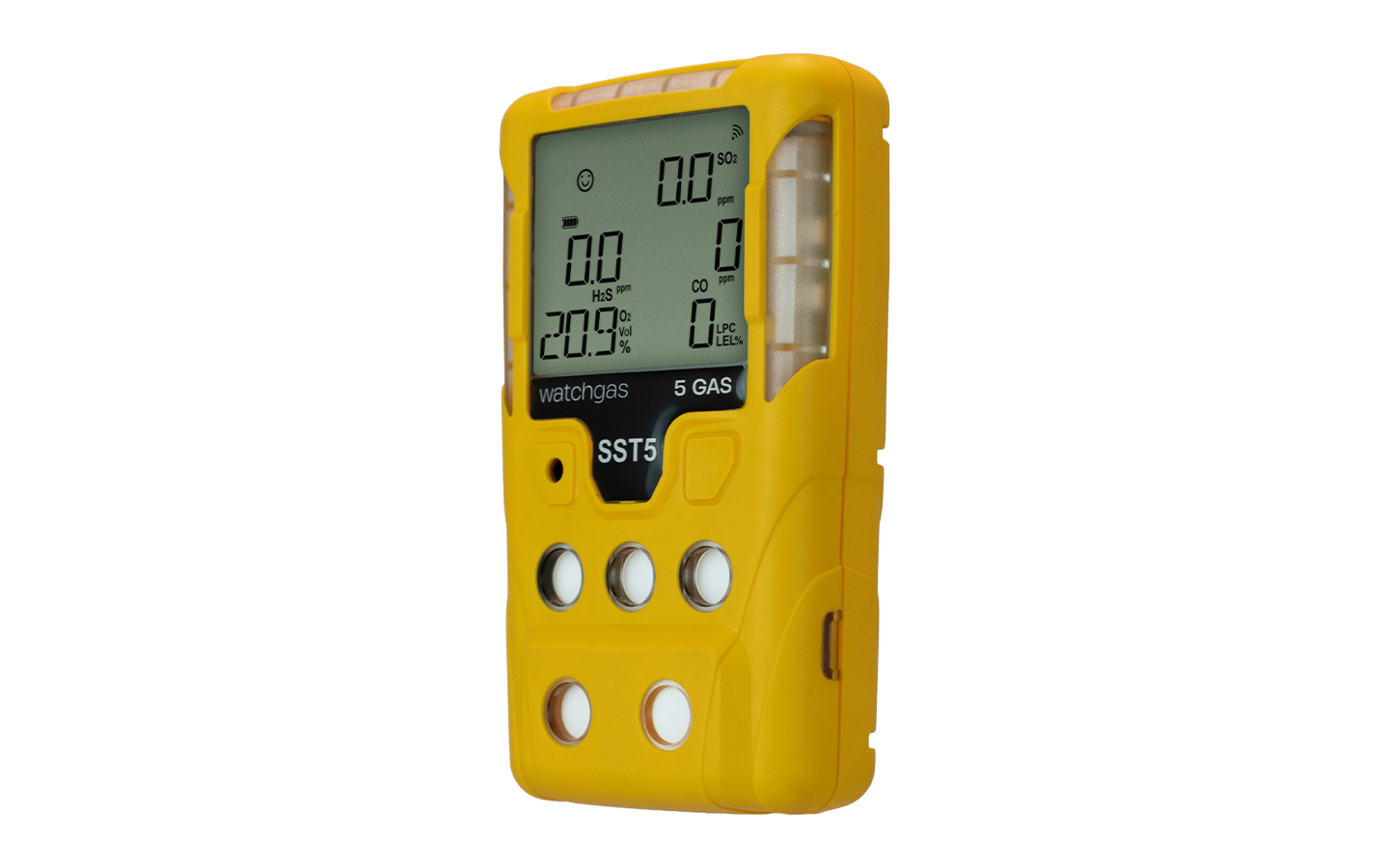
SST5 5-gas

Meet the new WatchGas SST5 - the next generation of compact multi-gas detection. Designed for maximum comfort and reliable protection, the SST5 delivers powerful 1 to 5-gas monitoring in an ultra-lightweight design with fast sensor response, long runtime, and industry-leading visibility and alarm performance.