




When people talk about gas detection, the conversation usually starts with the detector itself. Reliability, accuracy, and performance are all critical. However, as gas detection programs grow, managing the fleet often becomes as challenging as the detection process itself. What starts with a handful of detectors can quickly expand to hundreds of devices across multiple sites, contractors, and teams.
For safety managers, the priority is not only the detector performance, but also whether detectors are ready for use, up to date with testing requirements, involved in alarm events, or in need of maintenance. When this information is spread across different systems, spreadsheets, and locations, maintaining a clear overview becomes increasingly difficult.
This is where connected safety comes in. By bringing gas detection, testing, compliance management, and reporting into a single workflow, organizations gain a more comprehensive view of their operations while reducing the effort required to manage a growing fleet. In many applications, connected workflows can also help reduce operational costs by simplifying testing, compliance tracking, and data management processes.
WatchGas Safety Ecosystem
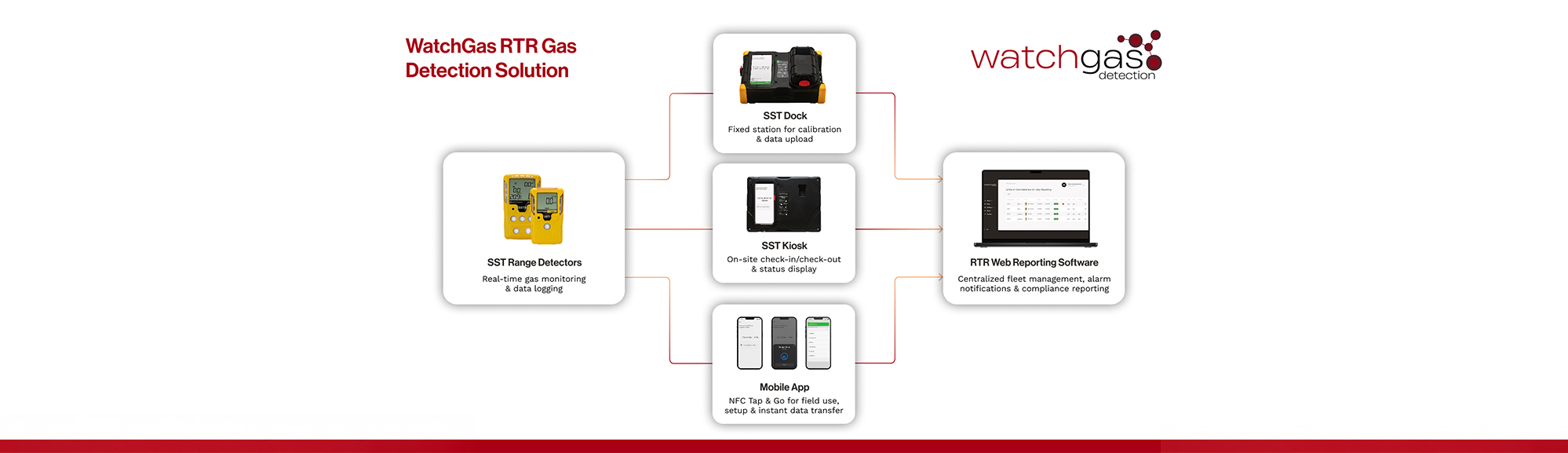
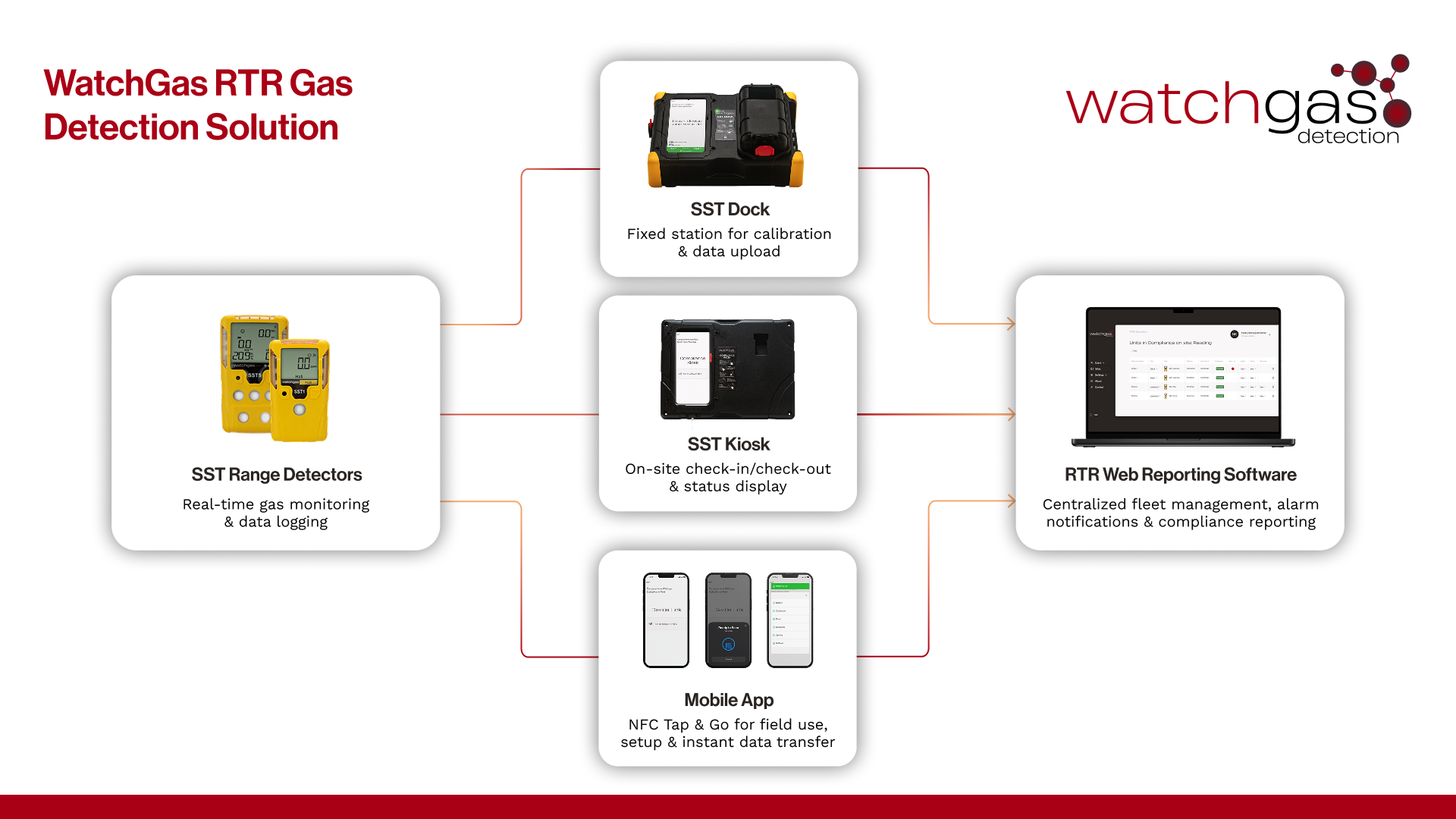
The WatchGas Safety Ecosystem brings together the key elements of a gas detection program, from field devices and testing equipment to compliance management and reporting. The ecosystem combines SST Range of gas detectors, SST Dock, Compliance Kiosk, Device Link App, RTR Web Reporting Software into one connected workflow.
At the foundation of the ecosystem is the SST range of gas detectors, providing real-time gas monitoring and event logging in the field.
The SST Dock supports bump testing, calibration, configuration, and data transfer, helping organizations maintain compliance while simplifying testing procedures and record management. With bump testing up to three times faster than traditional approaches, the SST Dock can help reduce testing bottlenecks while lowering test gas consumption and administrative effort.
The Compliance Kiosk provides a convenient check-in point for detectors, allowing workers to verify device status while giving safety managers a clearer view of fleet readiness, compliance status, and site activity.
For teams working remotely or across multiple locations, the Device Link App enables quick device interaction, configuration updates, event retrieval, and data synchronization through NFC technology, making important information available wherever work takes place.
At the center of the ecosystem is RTR Web Reporting Software, which brings together information from detectors, docks, kiosks, and mobile devices into a single platform. Instead of manually gathering records from different sources, safety teams can access a consolidated view of fleet health, alarm activity, maintenance requirements, compliance performance, and multi-site operations.
From Information to Action
Gas detection is only one part of running a successful safety program. Managing the information behind it can be just as important.
The WatchGas Safety Ecosystem brings all in one connected workflow, making it easier to stay on top of fleet performance, compliance, and day-to-day operations. By distributing testing, compliance checks, data collection, and reporting across purpose-built tools, organizations can improve efficiency and, in some applications, reduce traditional gas detection operational costs by up to 70%.
Talk to Us About Your Gas Detection Program
Talk to our team about building a connected gas detection workflow for your sites, devices, and safety requirements.